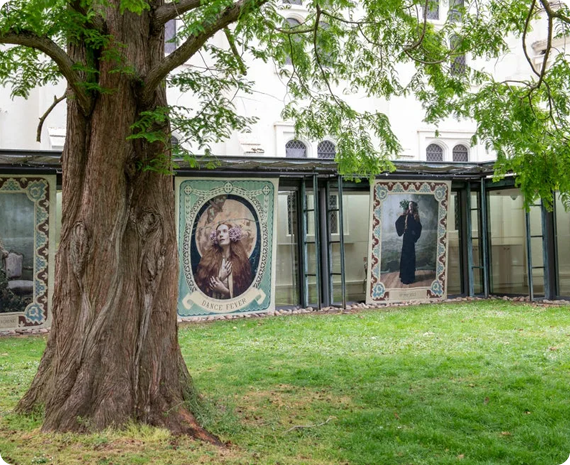



Ornate Wall Tapestries: A Guide to Renaissance and Baroque Styles
Quick answer: An ornate wall tapestry usually draws on Renaissance or Baroque style: realistic figures and deep perspective, rich colors, and elaborate woven borders of flowers, fruit, and scrollwork. Renaissance designs often depict classical myths, biblical stories, and court scenes, while Baroque designs add grand drama and movement. Today these styles are woven as reproductions that bring Old World character to a room.
If medieval tapestries feel flat and storybook-like, Renaissance and Baroque tapestries feel like paintings in thread. Here's how to recognize the styles and use them at home.
What makes a tapestry "ornate"?
Look for these hallmarks:
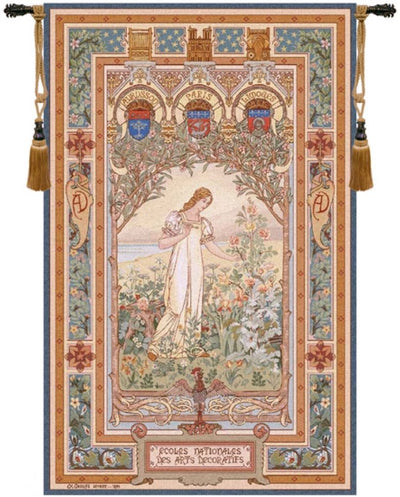
- Wide decorative borders framing the scene with garlands, fruit, flowers, columns, or scrolling acanthus leaves.
- Realistic figures with modeled faces and flowing drapery.
- Depth and perspective: landscapes, architecture, and skies receding into the distance.
- Rich, layered color: deep reds, golds, blues, and greens.
- Classical subjects: mythology, history, allegories, and grand hunting or pastoral scenes.
How did Renaissance tapestries differ from medieval ones?
Medieval tapestries tended toward flat compositions with stacked figures and flower-strewn backgrounds (see how medieval tapestries were made). For celebrated examples, see 5 Famous Medieval Tapestries and Where to See Them Today. During the Renaissance, painters began designing full-scale "cartoons" for weavers, bringing painterly perspective and realism into tapestry.
The most famous example is Raphael's set for the Sistine Chapel. According to the Royal Collection Trust, Raphael designed ten cartoons of the Acts of the Apostles in 1515–16 for Pope Leo X; they were woven in Brussels in the workshop of Pieter van Aelst. The surviving cartoons are on display at the V&A in London.
What is Baroque tapestry style?
Baroque tapestries of the 17th century amplified the drama: swirling compositions, theatrical lighting effects, and even grander borders. In 1662, the Gobelins manufactory in Paris was established under Louis XIV's minister Colbert, consolidating royal tapestry workshops, as the Mobilier national explains. Its tapestries set the standard for French court decor.
How do Renaissance, Baroque, and verdure styles compare?
| Style | Look | Typical subjects | Best rooms |
|---|---|---|---|
| Medieval | Flat, stylized, flower-strewn grounds | Unicorns, hunts, courtly life | Studies, entryways, bedrooms |
| Renaissance | Painterly perspective, realistic figures, wide borders | Myths, gardens, court scenes | Living and dining rooms |
| Baroque | Dramatic, dense, heavily framed | Grand allegories, royal scenes | Formal rooms, large walls |
| Verdure | Lush foliage and landscape, few or no figures | Forests, birds, chateaus | Almost any room |
For more on the leafy style, read Verdure Tapestry: History, Design Features, and Modern Uses.
Where can I find Renaissance-style tapestries?
Our Renaissance Wall Tapestries collection brings together designs inspired by Renaissance painting and tapestry, from garden scenes to classical figures. Related collections include Castles & Chateaus, Verdure, and the broad Medieval Old World range. Verdure examples include the Royal Verdure French Wall Tapestry and the Hunting in Compiegne French Wall Tapestry.
All are newly woven on jacquard looms and finished by hand — antique-style designs, not antique pieces. Many are woven in Belgium, France, and Italy; if you're weighing those against our North Carolina-woven pieces, see USA-woven vs. European-woven tapestries. Each product page lists exact fiber content, sizes, and timing.
How do I decorate with an ornate tapestry without overwhelming a room?
- Give it space. An ornate piece needs a calm wall around it; skip busy wallpaper.
- Echo one color. Pull a single border color, such as deep red or gold, into pillows, a throw, or a rug.
- Mix old and new. An ornate tapestry above a clean-lined modern sofa creates a striking contrast.
- Use warm lighting. Picture lights or warm lamps bring out texture.
- Choose the right hardware. Antiqued finials and tassels suit the style; see our Rods & Tassels collection.
Which rooms suit Renaissance and Baroque tapestries?
Dining rooms, libraries, and formal living rooms are natural fits, but these styles also work in bedrooms above an upholstered headboard and in stairwells where a large piece can be seen from below. For more room-by-room ideas, see our tapestry decorating ideas for every room. Pair with a coordinating tapestry pillow cover or medieval pillow cover to carry the look across the room.
What details should I look for in a Renaissance-style tapestry?
Once you know what to look for, Renaissance and Baroque designs are easy to "read":
- Garland borders: swags of fruit and flowers framing the scene, often with cherubs or urns at the corners.
- Classical architecture: columns, arches, balustrades, and fountains that create depth.
- Allegorical figures: people representing ideas such as the seasons, the virtues, or the elements.
- Pastoral and garden scenes: formal gardens, courtly picnics, and musicians.
- Layered landscapes: foreground figures, a middle ground of trees or buildings, and distant hills or skies.
Even a smaller piece with a single figure or garden view can carry the style if it has a rich border and painterly shading.
Do ornate tapestries only work in formal homes?
No. Some of the most striking rooms pair an ornate tapestry with simple, modern furnishings: a plain linen sofa, a glass coffee table, or a minimalist bed frame. The contrast lets the woven detail stand out and keeps the room from feeling like a museum. If you're nervous about going bold, start with a smaller ornate piece in a hallway or above a desk, or try the look first with a pillow cover.
Frequently Asked Questions
What is an ornate wall tapestry?
It is a tapestry with rich detail, realistic figures, deep color, and elaborate woven borders, usually in Renaissance or Baroque style.
What is the difference between medieval and Renaissance tapestries?
Medieval tapestries are flatter and more stylized; Renaissance tapestries borrow painterly perspective and realistic figures, often with wide decorative borders.
What is the most famous Renaissance tapestry set?
Raphael's Acts of the Apostles, designed in 1515 to 1516 for the Sistine Chapel and woven in Brussels, is among the most famous.
Are your Renaissance tapestries antiques?
No. They are antique-style designs, newly woven on jacquard looms and finished by hand.
What rooms suit an ornate tapestry?
Dining rooms, libraries, formal living rooms, bedrooms, and stairwells are all good choices.
More from >
Related Articles
Share this
Author: Michael Blasingame

Michael Blasingame is the co-founder and driving force behind Quality Tapestries, where he brings over a decade of passion for timeless textile art and exceptional customer service to every tapestry offered. Growing up in Visalia, California, Michael cultivated a love for creativity, music, and craftsmanship that now informs his work and leadership at the company. Together with his wife Ashley, he manages the business with a focus on quality, personal connection with customers, and a commitment to products that become cherished pieces in homes worldwide.