


Verdure Tapestry: History, Design Features, And Modern Uses
The word verdure comes from the French word vert, meaning green. Verdure tapestry, also known as garden tapestry, is a decorative textile style in which greenery is the main structure of the design. The surface is largely covered with plant-based foliage. Instead of making a single focal point stand out, verdure tapestries are often seen as decorative backgrounds that help a room look better overall. To better understand this textile tradition, it is useful to examine its historical background, design characteristics, and contemporary relevance.
Verdure Tapestry At A GlanceVerdure tapestry is a European textile tradition defined by foliage-rich designs and green-dominant colour palettes. Emerging as a recognised style by the 16th century, it features dense vegetation, detailed botanical weaving, and non-narrative compositions. Today, verdure tapestries are used in wall decor, upholstery, hospitality interiors, exhibitions, and educational spaces due to their visual balance, durability, and timeless decorative value. |
History Of Verdure Tapestry
No one knows the exact time when verdure tapestries were first created. However, by the 16th century, these were widely known and became popular across Europe as a distinct style of tapestry art.
In the second half of the 17th century, verdure tapestry designs evolved further with the addition of broader landscape elements. During this period, these were produced on a large scale for export and were widely used in interior decoration.
Aubusson and Lille are famous places in France where verdure tapestries were made. They mostly produced smaller ones. These smaller pieces were commonly used to cover furniture, such as verdure tapestry pillows, chairs, and cushions, rather than being hung on walls.
Even today, green tapestries are trending in fashion, and the top-level weavers in France, Belgium, and Italy are still going with the old way which is more than 100s of years old.


What Are The Design Features Of Verdure Tapestry?
Nature-Centred Subject Matter
Verdure tapestries focus almost entirely on the natural world. The surface is filled with trees, leafy branches, climbing vines, flowers, and dense ground cover. You can also find animals such as birds, deer, or rabbits, but people and buildings are usually absent or kept very small.
Green-Dominant Colour Palette
Weavers developed a wide range of green tones by overdyeing blue-based yarns with yellow dyes such as weld or dyer’s broom, a technique used in historic French verdure tapestries and other European workshops. This method allowed subtle variation without introducing strong colour contrast. Darker greens were placed in background areas to push space backward, while lighter greens highlighted leaves and plants in the foreground.
Dense Vegetation Composition
You will find multiple types of vegetations that are placed strategically in the tapestry verdure. For example, tall trees such as oak, chestnut, or pine are usually placed along the upper sections to establish height and depth. In the central areas, mid-level shrubs and flowering bushes. Climbing plants and vines weave through branches, often crossing diagonally. Near the bottom, grasses, ferns, and low plants are tightly grouped to anchor the scene.
Detailed Botanical Weaving
These are made using the precise weaving techniques to define plant structure clearly. Leaves are shaped with distinct edges, veins, and varied sizes. Flowers are identifiable species based on plants familiar to European landscapes. Botanical forms were usually copied from pattern cartoons used across workshops, ensuring consistency and accuracy.
Non-Narrative Decorative Design
The design has no fixed focal point, which allows sections to be cropped, resized, or joined without affecting meaning. This made production efficient for workshops supplying different wall sizes. Interiors also benefited. The tapestry remained visually complete even when partially covered by furniture or architectural features.
Modern Uses Of Verdure Tapestry
-
Wall Art In Homes
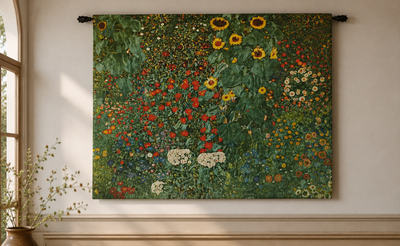
Homeowners use verdure tapestries as wall-mounted decor in spaces where large artwork is needed. They are commonly placed behind sofas, beds, or dining tables to give the wall a clear point of focus. In double-height living areas, a single large tapestry can replace multiple framed pieces. Verdure tapestries also work well in hallways and stair landings. Since the design is decorative and non-directional, the tapestry can be positioned at different heights.
-
Upholstery And Soft Furnishings
Their use is not limited to wall decor. Verdure tapestry patterns are commonly applied to upholstered items such as sofa cushions, throw pillows, dining and accent chair seats, window benches, ottomans, footstools, and even headboards. Smaller-scale verdure designs are chosen for these applications so plant details remain clear at close viewing distance.
-
Backdrop For Events And Exhibitions
Event planners use verdure tapestries as temporary backdrops for exhibitions, weddings, and cultural displays. They are placed behind stages, speaker areas, photo zones, or display tables. The textile surface reduces harsh reflections from lighting, which helps with photography and presentations. Verdure designs also work well in galleries and museums because they provide historical or nature-based context without competing with exhibited objects.
-
Luxury Hospitality Spaces
In luxury hotels and resorts, they are commonly installed in lobbies, private lounges, corridor feature walls, and high-end suites. Designers use them to soften large architectural surfaces made of stone, glass, or concrete. Verdure tapestries also help manage acoustics in expansive spaces by reducing sound reflection. In hospitality settings, they are selected for their durability and timeless appearance. So there is no need to rely on frequent decor updates.
-
Educational And Interpretive Tools
They are placed in classrooms, study galleries, and interpretive spaces to demonstrate historical weaving methods, dye usage, and design planning. After seeing them, one can understand how natural environments were represented in decorative arts before printed images were common. Labels and guided displays often point out plant types, weaving density, and colour layering.
Wrapping Up
From the above information, you can see that verdure tapestry is more stable and does not change with trends. It does not depend on fashion cycles, bold themes, or seasonal updates. Instead, it supports spaces that are meant to feel settled, lived-in, and considered.
If you are planning to add verdure tapestry to your space and are looking for a reliable online source, Quality Tapestries offers a wide selection. Our collection includes Belgian tapestries, tree of life designs, and tapestry pillow covers, along with many other options. You can explore different styles and order your favourite one!
FAQ’s
Q1. What Materials Are Used In Verdure Tapestries?
Mostly wool. Sometimes it is mixed with silk threads to add more texture, depth, and subtle highlights.
Q2. What Are The Main Design Elements Of Verdure Tapestries?
In the examples of their design characteristics, some of them include nature with rich greens, multi-layered vegetation, floral designs, forests, and sometimes animals/birds with very minimal architecture and humans.
Q3. Why Were Verdure Tapestries Popular In Historic Interiors?
They help to insulate stone walls, improve sound quality, and represent luxury and refined sensibilities.
Q4. How Do Verdure and Figurative Tapestries Differ?
Figurative tapestries depict scenes of the past, the Bible, or the mythologies. Compared to that, the main themes of the verdure tapestries are nature and the decorative leaves.
Q5. How Do You Care For And Maintain A Verdure Tapestry?
Never expose them to the sun. Keep the humidity always at a stable level, and vacuum them gently with a protective mesh.
Q6. How are Verdure tapestries different from figurative ones?
Verdure tapestry wallpaper is printed on flat surfaces. On the other side, verdure tapestries are woven textiles with visible thread structure.
Related Articles
Share this
Author: Michael Blasingame

Michael Blasingame is the co-founder and driving force behind Quality Tapestries, where he brings over a decade of passion for timeless textile art and exceptional customer service to every tapestry offered. Growing up in Visalia, California, Michael cultivated a love for creativity, music, and craftsmanship that now informs his work and leadership at the company. Together with his wife Ashley, he manages the business with a focus on quality, personal connection with customers, and a commitment to products that become cherished pieces in homes worldwide.