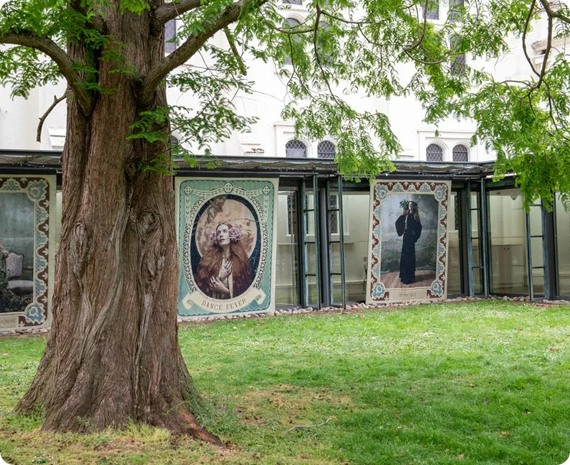



Why Buy Machine-Made Tapestry Over Handmade?
Traditionally, handmade tapestries were crafted with great care and attention by expert artists who would spend weeks or months finishing them. Such a high level of care in handmade work always gives people a sense of quality and originality associated with these pieces of work. However, with the advent of new technologies in textiles, machine-made tapestries are now readily available in the market. Machine-made tapestries and tapestry wall hanging pieces are made using high-tech machines, which can reproduce complex designs with high precision and in a quick manner.
This contrast naturally raises an interesting question. If handmade tapestries are this much praised for their quality, originality, and traditional value, why do people still buy tapestry that are machine-made in such high numbers? To get a clear insight, let's proceed with this blog.
Essential Takeaways on Choosing Machine-Made TapestriesThis blog explains the advantages of machine-made tapestries, focusing on precision manufacturing, consistent quality, and durable materials. It highlights efficient production processes, accurate sizing, and design flexibility. Practical buying tips help identify high-quality pieces, emphasizing factors like fabric density, print clarity, and finishing to ensure long-lasting performance and visual appeal. |
How Are Machine-Made Tapestries Better Than Handmade Ones?

Pixel-Level Design Accuracy
Digitally programmed machine-made tapestries utilize a design file that shows exactly where and how each thread goes, allowing you to create the same design with consistent sharpness in the pattern, cleanliness of edges, and accurate placement of colors. Additionally, there are no variations between each piece because once you program a design, the craftsmanship will duplicate it in the same manner, providing for absolutely uniform size and detail from one piece to another.
Engineered Fiber Compatibility
The materials themselves are another huge plus. A lot of machine-made tapestries are constructed with fibers that have been carefully designed to work well. These textiles are made to last through daily use without being worn out too rapidly. They keep their shape, don't wrinkle, and stay whole even in busy places.
Instant Design Switching Without Setup Delays
Unlike conventional weaving, you don't have to change the whole setup to change a design here. The system changes to a new pattern, and production goes on as before. This is how you can make different designs one after the other without any halt or additional steps. Thus, new designs can be produced quickly whenever required, and this is a highly flexible and time-saving process.
Multi-Process Fabric Engineering
There are multiple steps that have been followed to create a machine made tapestires, let’s have a look at these steps:


-
First, the fibers are picked out and combined so that the cloth is soft and robust enough to last.
-
The fibers are transformed into smooth, even yarns. This helps keep the texture from getting uneven or weak later.
-
Then follows the weaving, where machines precisely control how tight and dense the threads are. This makes the fabric stronger.
-
Then, heat applied helps keep the fabric in position so it can stay in shape and not shrink for many years.
-
Finishing coats are often used to prevent dust, moisture, and everyday wear and tear from accumulating on the fabric.
-
Lastly, all tapestries must be checked for quality before they can be used as intended.
Zero-Deviation Dimension Control
Ever noticed how some textiles end up slightly off in size? That usually comes from manual variation, but machines handle this very differently.
-
It starts with programmed dimensions; the exact width and length are fed into the system, often down to millimeter-level accuracy.
-
Electronic systems for let-off and take-up of the yarn are used to regulate the yarn feed and the rolling of the fabric. The length is perfectly uniform at all times.
-
Tension control of each yarn is done in real time, ensuring that each one is stretched to an equal degree. This prevents any stretching of the edges.
-
Specialized cutting tools, usually computerized, are used to cut the fabric to exact sizes after weaving.
Since each process is automated, the final tapestry is woven to the exact size with no deviations, even when weaving multiple pieces.
Tips Before Buying Machine-Made Tapestry
Before you buy tapestries, it’s important to understand a few key factors that can help you choose a high-quality machine-made tapestry that fits your needs perfectly:
Feel If The Fabric Is Thick Enough
You should run your hand through it. Good tapestries should feel tight, not airy. More thread density means a stronger fabric that is less likely to rip.
Check the sharpness of the print (no blurring or pixelation)
Pay attention to minor things like lines or patterns. Sharp prints are made using high-resolution processing, while blur is frequently caused by stretched or low-quality prints.
Make sure the colors are bright and even, not faded or patchy
Watch how colors change. Dye application that is regulated will show smooth gradients and uniform tones, whereas uneven spots will show that the color didn't absorb well throughout manufacture.
Inspect The Edges For Clean Stitching And Proper Hemming
Look at the edges closely. They should be straight and neatly stitched, not loose or uneven, which can cause damage later.
See If The Design Is Properly Centered And Aligned
Step back and observe the whole piece. The design should sit evenly, not shifted or tilted to one side.
Check The Backside For Ink Bleeding Or Poor Printing
Turn it over and look at the back. The printing procedure wasn't done well if you detect smudges or ink bleeding.
Look for a clean finish with no loose threads
Look closely at the little things. When the ends of the yarn are clean, they don't stick out, which maintains the tapestry appearing nice over time and stops it from coming apart. A clean finish is often a sign you’ve chosen the right tapestry to buy.
Conclusion
Now you know why you should choose machine-made tapestries; it all comes down to what suits your needs and lifestyle best. If you are looking for a reliable place to buy your tapestries, then you can rely on one of the best tapestry website Quality Tapestries, as we provide a range of thoughtfully designed products, including modern abstract designs, nature-inspired, classic art, custom tapestries, and statement tapestry wall hangings, etc., which can fulfill all your requirements.
FAQs
Q1. Are machine-made tapestries suitable for outdoor use?
Most machine-made tapestries are designed for indoor use, but some with protective coatings can handle limited outdoor exposure. Always check product specifications before use.
Q2. Can machine-made tapestries be customized with personal designs?
Yes, many manufacturers offer customization options where you can print personal artwork, photos, or unique patterns on machine-made tapestries.
Q3. How do you clean and maintain a machine-made tapestry?
Most can be gently hand-washed or machine-washed on a delicate cycle. Avoid harsh detergents and always air dry to maintain fabric quality.
Q4. Do machine-made tapestries require special installation tools?
No, they can be easily hung using hooks, rods, adhesive strips, or clips, depending on your wall type and preference.
Q5. Can I buy a wall tapestry for small rooms?
Yes, you can easily buy wall tapestries for small rooms by choosing compact sizes and lighter designs that enhance the space without making it feel crowded.
Q6. Can I fold and store a machine-made tapestry easily?
Yes, they are flexible and can be folded compactly without damage, making them convenient for storage or seasonal use.
Related Articles
Share this
Author: Michael Blasingame

Michael Blasingame is the co-founder and driving force behind Quality Tapestries, where he brings over a decade of passion for timeless textile art and exceptional customer service to every tapestry offered. Growing up in Visalia, California, Michael cultivated a love for creativity, music, and craftsmanship that now informs his work and leadership at the company. Together with his wife Ashley, he manages the business with a focus on quality, personal connection with customers, and a commitment to products that become cherished pieces in homes worldwide.