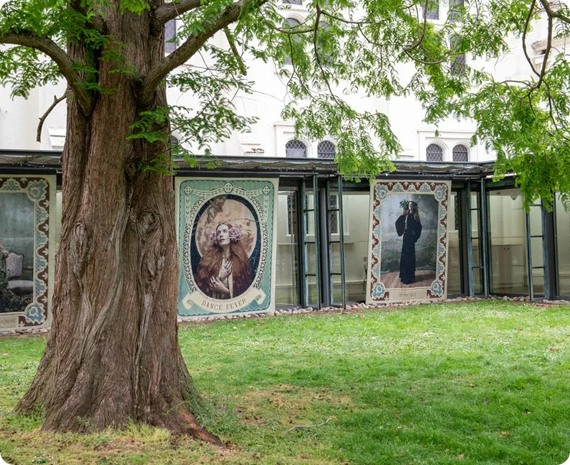



Tapestries: A Complete Guide to Styles, History, Weaving Origins and Choosing the Right Piece for Your Home
A tapestry is more than just a wall decor; it brings depth, artistry, and a sense of timeless elegance to your living space. While we see them as design statements today, their history stretches back centuries, when they were valued for their beauty, weaving patterns, and practical function. That time, the handwoven tapestries depicted massive historical events and even insulated drafty stone castles.
Today, the art form bridges generations, infusing modern apartment designs with the raw, handwoven spirit of ancient looms. But with so many styles, materials, and regional weaving origins to sort through, finding the right one can feel overwhelming. So, this guide offers everything you need to know about tapestry and helps you choose the best textile to enhance the elegance of your interiors.
Key Takeaways
How Tapestries are Made: Weaving Techniques, Materials, and Country of Origin?
A tapestry is a decorative textile artwork in which colored threads are woven directly into the fabric to create detailed images. Its production combines specialized weaving techniques, carefully selected fibers, and region-specific craftsmanship traditions.
Weaving Techniques Behind Woven Tapestries
Here are the region-specific techniques that are highly used in the woven tapestries:

Weft-Faced Weaving and Pictorial Design
One of the defining features of woven tapestry is a technique known as weft-faced weaving. In this method, the colored weft threads are packed so tightly that they completely cover the vertical warp threads, making the artwork visible on the surface.
This approach allows artisans to create:
-
Intricate scenes and landscapes.
-
Smooth color transitions and shading.
-
Fine details woven directly into the fabric.
High-Warp and Low-Warp Looms
Historically, European tapestries were produced on either high-warp (haute-lisse) or low-warp (basse-lisse) looms. The primary difference lies in the position of the warp threads and how the weaver follows the design, known as a cartoon.
-
High-warp looms hold warp threads vertically, with the design placed behind or beside the loom.
-
Low-warp looms position the warp horizontally, allowing the design to sit beneath the threads.
Although both methods create the same type of tapestry, loom orientation affects the weaving process and workflow. These traditional weaving methods continue to influence modern tapestry production today. For a deeper look at the practical side of tapestry creation, explore our guide on how to weave stunning wall hangings: patterns & techniques.
The Jacquard Loom and Modern Production
The invention of the Jacquard loom in the early 1800s revolutionized tapestry production. Developed by Joseph Marie Jacquard, the system used punch cards to control individual warp threads and automate complex woven patterns. Because the pattern is woven directly into the fabric rather than printed, Jacquard-woven tapestries remain durable and visually detailed for years.
Modern Jacquard technology with digital design offers several advantages:
-
Highly detailed and consistent imagery.
-
Precise color transitions and pattern accuracy.
-
Efficient large-scale production.
-
Repeatable designs without sacrificing woven texture.
Since many contemporary wall tapestries are produced using advanced Jacquard technology, understanding the differences between production methods can be helpful. Learn more in Why Choose Machine-Made Tapestry Instead of Handmade?
Materials and Weaving Traditions
Cotton, Wool, Silk, and Synthetic Fibers
Cotton: Widely used in modern tapestry, cotton offers soft texture, lighter weight, and excellent dimensional stability. Following detailed Jacquard weaving, it produces crisp imagery, essential for decorative wall tapestries.
Wool: It was the preferred material for large wall hangings because its natural elasticity and crimp allowed weavers to create dense, durable fabrics while holding rich, saturated dyes.
Silk: For finer details and a subtle sheen, silk was the most recommended choice, particularly in luxury and decorative tapestries.
Synthetic Fibers: Materials like polyester and acrylic are commonly used in contemporary tapestries as they offer excellent color retention and resistance to fading, moisture, and stretching.
How Country of Origin Influences Tapestry Production?
The country of origin often reflects distinct weaving traditions. Belgian workshops became known for dense weaving and narrative designs, while French centers such as Gobelins and Aubusson developed refined painterly styles. Italian tapestries drew inspiration from Renaissance art, whereas modern American-made pieces commonly use computerized Jacquard looms for consistent large-scale production.
To see how these traditions influence iconic designs and subjects, exploring tapestry artwork can give you better insight into it.
Belgian, French, Italian, and American Tapestry Weaving: How Country of Origin Shapes Quality and Style
Belgian Tapestry Weaving Traditions
Known for their craftsmanship, Belgian weavers used dense weft-faced weaving, combining wool and silk yarns to achieve intricate details, smooth color gradations, and durable constructions.
French and Italian Tapestry Heritage
French workshops focused on achieving a painterly weaving through fine color blending, subtle shading, and detailed cartoon-guided production. Italian tapestries translate Renaissance artworks into textiles using full-scale cartoons, combining artistic precision with advanced European weaving techniques.
American Jacquard Tapestry Production
Unlike traditional hand-weaving methods, American-made tapestries are commonly produced on computerized Jacquard looms, delivering detailed patterns, consistent quality, and efficient production.
Now, if you're curious about the origins of these weaving centers, explore What Areas Are Known For Their Historic Tapestry Weaving?
Medieval and Historical Tapestries: Subject Matter, Symbolism, and What Collectors Should Know
Rich in symbolism, medieval tapestries featured everything that comprises the top Unicorn Tapestry styles and designs you should know.
Medieval Tapestry Subjects and Symbolism
Hunting Scenes, Courtly Life, and Heraldic Symbolism
Medieval tapestries often depicted hunting scenes, battles, noble gatherings, coats of arms, and heraldic animals. Beyond decoration, these woven artworks communicated wealth, family lineage, political influence, and social status within castles, manors, and religious institutions.
The Unicorn Tapestries and Religious Allegory
Among the most famous medieval works, the Unicorn Tapestries originated in the southern Netherlands during the late fifteenth century. Their imagery is widely interpreted as a blend of courtly romance, Christian symbolism, and Christological allegory, explaining their enduring popularity and reproduction today. For a deeper look into their symbolism and lasting influence, explore The Unicorn Tapestries and their contemporary reimagining.
Millefleurs Backgrounds and Medieval Design Traditions
Millefleurs, meaning “thousand flowers,” emerged from northern French and Flemish weaving workshops. Characterized by densely scattered flowers, plants, and small animals, these backgrounds added visual richness while also reflecting medieval ideas about nature, spirituality, and paradise.
European Tapestry Styles by Country: Tuscan, French, Venetian, and Mediterranean Designs
European tapestry traditions reflect unique weaving, which has shaped their regional designs over centuries. So, to explore the origins of these weaving traditions, see what areas are known for their historic tapestry weaving?
Italian Tapestry Styles and Regional Design Traditions
Italian tapestry traditions evolved alongside the country's artistic movements, creating distinctive woven styles that remain popular in modern interiors.
| Style | Distinctive Characteristics | What It Represents |
|---|---|---|
| Tuscan | Vineyards, stone villas, rolling hills, still-life motifs, and warm earth-tone palettes. | Central Italy's rural heritage. |
| Venetian | Gondolas, canals, bridges, waterfront architecture, and detailed cityscape scenes. | Venice's maritime and architectural identity |
| Amalfi Coast & Mediterranean | Seaside villages, cliffside landscapes, gardens, coastal views, and bright Mediterranean colors. | Southern Italy's coastal lifestyle. |
| Renaissance Influence | Classical figures, religious subjects, balanced compositions, and artwork-inspired woven scenes. | Italy's influence on European tapestry design. |
French Tapestry Styles: Aubusson, Gobelins, Paris Scenes, and Café Terrace Designs
From Aubusson and Gobelins to Parisian Designs
-
French tapestry styles are known for their artistic refinement and diverse subject matter. The Aubusson tradition, developed in the Creuse region, is recognized for pastoral landscapes, floral arrangements, and lighter compositions that create a more relaxed appearance than the densely narrative Flemish style.
-
In contrast, tapestries associated with the Gobelins manufactory often featured mythological scenes, classical themes, and allegorical subjects commissioned for royal interiors during the reign of Louis XIV. Their detailed compositions and rich color palettes helped establish the grandeur associated with French decorative arts.
-
French tapestry design later expanded to include Parisian cityscapes and café scenes, influenced by nineteenth-century Impressionist art. Woven adaptations of famous works, including Van Gogh's Café Terrace at Night, a popular wall hanging translated painterly brushwork, architectural detail, and atmospheric lighting into richly textured textile form.
Floral, Landscape, Abstract, and Wine Tapestries: Choosing by Subject and Style
Tapestries transform interiors through subject and style, with floral, landscape, abstract, and wine-themed designs each offering distinct visual appeal, mood, and decorative character suited to different aesthetic preferences and spaces.
What Are Floral and Landscape Tapestries?
Floral and landscape tapestries draw from centuries of artistic tradition, blending natural beauty, and are widely used to enhance room ambiance, color balance, and overall interior style.
Floral tapestry traditions: from medieval millefleurs backgrounds to Dutch Golden Age still life and Arts and Crafts botanical designs
A visual journey through nature’s evolving artistic interpretations, from decorative patterns to botanical harmony, offering a complete guide to tapestry artworks.

What subjects do landscape tapestries typically depict, and how do scenes create visual depth on walls?
Landscape compositions transform natural scenery into layered visuals on textile surfaces, while thoughtful display, such as choosing the right tapestry rod, ensures a balanced and effective wall presentation.
| Landscape Subject | Depiction | Depth Effect |
|---|---|---|
| Countryside views | Rural fields, hills, rivers, and distant horizons. | Creates depth through layered foreground, middle, and background with perspective lines pulling the eye inward. |
| Seasonal settings | Scenes of spring, summer, autumn, or winter landscapes. | Uses color shifts, light changes, and atmospheric effects to suggest distance and spatial variation. |
| Pastoral gardens | Structured gardens with paths, hedges, and fountains. | Builds depth using geometric layouts and repeating forms that guide visual movement into the scene. |
How do you choose the right floral or landscape tapestry for hanging?
The following points outline key considerations for selecting and sizing tapestries effectively within interior spaces.
-
Colour Palette: Select tapestries that echo or complement existing room tones. Floral designs work well with accent colours in cushions or rugs, while landscape tones should align with wall paint and lighting warmth to maintain visual harmony.
-
Furniture Style: Consider your furniture’s design when choosing a tapestry. Ornate or carved furniture pairs well with floral or traditional tapestries, while sleek, minimalist furniture complements modern or landscape designs for a cohesive look.
-
Room Scale: Smaller rooms benefit from lighter, less dense designs to avoid visual clutter, whereas larger spaces can support detailed or expansive compositions without overwhelming the environment.
-
Wall Size & Large-Format Guidelines: Measure your wall before selecting a tapestry. Large-format pieces should cover around 60–75% of the wall width, with enough surrounding space and ceiling clearance for balanced placement.
How do abstract, wine, Van Gogh-inspired, and map tapestries differ in style and decorative interpretation?
These tapestry styles differ in how imagery is interpreted, ranging from non-representational design to narrative, historical, and types of decorative wall tapestries that tell visual storytelling.
-
Abstract Tapestry Design: Structured geometry, repeating patterns, expressive textures, and layered colour transitions create visually dynamic textile pieces that suit contemporary interiors.
-
Wine-Inspired Tapestries: Warm vineyard scenes, wine cellars, tasting spaces, and rustic café settings reflect the richness of wine culture and hospitality-driven décor.
-
Van Gogh-Based Textile Art: Iconic artworks such as The Starry Night, café terrace at Night, and Sunflowers are translated into woven form through bold colour contrasts and textured patterns that preserve artistic movement.
-
Map Tapestry Designs: Inspired by historical cartography, these designs use vintage detailing, decorative borders, and geographic layouts to turn maps into visually engaging wall art.
Custom Woven Tapestries: Photo-to-Tapestry Process & What to Expect
A custom tapestry is created by converting photographs into woven textile designs, translating digital images into durable fabric art through specialized weaving techniques and detailing, making it an accessible process to weave stunning wall hangings for beginners.
How does the Photo-to-Tapestry Custom Weaving Process Work?
Photo-to-tapestry weaving involves submitting an image, converting it into a digital weaving pattern, selecting yarns, and then producing and finishing the textile through controlled loom-based fabrication.
How is a digital image converted into a Jacquard file and woven on a loom with quality control?
A digital image is first translated into a Jacquard-ready format where colour reduction simplifies tones into a limited, weave-compatible palette, thread mapping assigns each colour to specific yarns, and resolution is adjusted to match loom pixel density for accurate detail reproduction.
During weaving, warp threads are tensioned to form the structural base, while the weft follows programmed sequences to build the image line by line. Production is continuously monitored through quality checkpoints that verify alignment, colour consistency, and weave accuracy.
How do size, loom width, and thread count affect tapestries?
Sizing in custom woven tapestries is determined by loom capacity and weave resolution. Loom width sets the maximum physical span of the textile, while aspect ratio maintains proportional scaling of the original image. Thread count defines weave density, directly influencing detail level and overall finished dimensions of the tapestry.
What is the process for quotes, proofs, and production time?
Turnaround, pricing, and proofing in custom tapestry production follow a structured pre-loom workflow, guiding buyers who choose to buy machine-made tapestry over handmade options.
-
Quote process: Artwork is evaluated for weave complexity, colour count, thread density, and size, determining cost, materials, and loom time estimation.
-
Proof review stage: A digital or sample proof checks colour accuracy, resolution mapping, and pattern alignment before final Jacquard file approval.
-
Turnaround time: Production duration depends on loom scheduling, yarn preparation, and weave density, with higher complexity increasing overall manufacturing time significantly.
What Subjects Work Best as Custom Woven Tapestries?
A structured overview of how different image types translate into woven tapestries based on composition, detail control, and material suitability.
| Subject Type | How It Translates into Woven Tapestry |
|---|---|
| Portrait photographs | Facial detail is woven through tonal shading instead of sharp pixels, while simplified backgrounds ensure subject clarity, balanced contrast, and loom-ready composition suitability. |
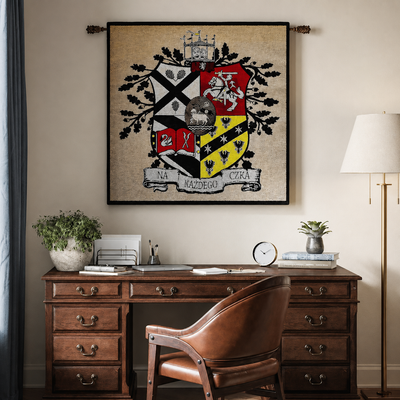
| Family crests & heraldic designs | Vector-style geometry with clean outlines and limited colours translates precisely into thread patterns, ensuring strong symbolic clarity and distortion-free, scalable woven reproduction. |
| Landscape & architectural photography | Depth is achieved through layered tonal weaving, while contrast and controlled colour ranges preserve spatial separation and structural detail within woven textile limitations. |
| Existing paintings & artworks | Reproduction depends on rights clearance and suitable Image resolution, with balanced compositions ensuring accurate colour translation and preservation of artistic intent in weave form. |
Hanging, Caring For, and Accessorising Wall Tapestries
A practical guide to preserving textile quality while enhancing visual presentation through functional support systems and complementary décor elements that improve both longevity and interior aesthetic balance.
How to Hang a Wall Tapestry Correctly?
Tapestry installation combines four proper support systems, secure wall fixing, and finishing details to achieve both stability and a visually balanced display across different interior surfaces.
Tapestry rod systems
Support methods vary depending on the construction: sleeves sewn into the fabric allow concealed hanging, clip rings grip the top edge for adjustable positioning, and back-sleeve channels keep the rod hidden while distributing weight evenly for a smooth drape.
Rod selection criteria
Material plays a key role in performance wood works for lighter pieces, while iron or brass handles heavier loads more effectively. Length must match the tapestry width, and adequate load capacity prevents sagging, with finials adding both support and stylistic finish.
Wall anchoring methods
For structural support, studs offer the most secure fixing point. In hollow drywall, toggle bolts expand behind the surface for grip, while masonry anchors are suited to brick or plaster. Lightweight tapestries may use adhesive hooks when wall integrity limits drilling.
Tassels and decorative hardware
Finishing elements like tassels and end caps help frame the tapestry visually, softening hardware visibility while tying the piece into the room’s decorative theme and enhancing overall presentation.
Tapestry Care, Cleaning, and Long-Term Preservation: Fabric, Dust, and Storage
Proper maintenance of tapestries depends on controlled cleaning methods, careful handling, and environmental protection techniques. The following points explain how to care for and clean tapestry rugs without damaging them.
-
Safe vacuum cleaning: Low-suction settings with a handheld brush attachment help remove surface dust without pulling or distorting warp and weft threads. Gentle, one-directional passes prevent snagging and reduce stress on delicate woven fibres.
-
Spot cleaning methods: Minor stains can be treated using pH-neutral detergents diluted in cold water, applied lightly without soaking the fabric. Grease, dye transfer, or deep-set marks generally require professional textile conservation to avoid fibre damage.
-
Environmental impact control: Direct sunlight accelerates dye fading, while fluctuating humidity weakens fibres and encourages mildew. Continuous HVAC airflow can dry out threads unevenly, leading to brittleness and gradual surface degradation.
-
Long-term storage practices: Rolling the tapestry around an acid-free core preserves structure better than folding, which creates permanent crease lines. Acid-free tissue wrapping protects against dust, moisture, and chemical transfer during extended storage periods.
Conclusion
Wall tapestries feel like more than décor to us; they connect art and space in a meaningful way. We appreciate how woven textures, careful craftsmanship, and thoughtful design choices can completely change the mood of a room. Each piece reflects a balance of creativity and structure, shaped through material, technique, and visual planning. With Quality Tapestries, whether custom or pre-designed, we can express personality through walls in a lasting, artistic form that feels both personal and timeless.
FAQs – Tapestries: Styles, Weaving, and Selection Guide
Are wall tapestries heavy enough to damage drywall?
No, most tapestries are lightweight. When properly mounted with appropriate hooks or anchors, they do not cause structural damage.
Do wall tapestries work well in humid climates?
Yes, but they should be kept in ventilated areas to avoid moisture buildup. Synthetic blends usually perform better in high-humidity environments.
Will the colors of a tapestry look different in real indoor lighting compared to online images?
Yes, lighting can shift tones; warm lights deepen yellows and reds, while cool lighting enhances blues and contrast, slightly altering perceived colors.
What mistakes do people make when choosing tapestry size for sofas or beds?
A common mistake is selecting widths smaller than the furniture span, which breaks visual alignment and makes the wall appear unbalanced.
What should I consider when buying a tapestry for gifting to someone with an unknown décor style?
Choose neutral color palettes, nature-inspired designs, or abstract patterns, as these adapt easily across multiple interior preferences.
Related Articles
Share this
Author: Michael Blasingame

Michael Blasingame is the co-founder and driving force behind Quality Tapestries, where he brings over a decade of passion for timeless textile art and exceptional customer service to every tapestry offered. Growing up in Visalia, California, Michael cultivated a love for creativity, music, and craftsmanship that now informs his work and leadership at the company. Together with his wife Ashley, he manages the business with a focus on quality, personal connection with customers, and a commitment to products that become cherished pieces in homes worldwide.